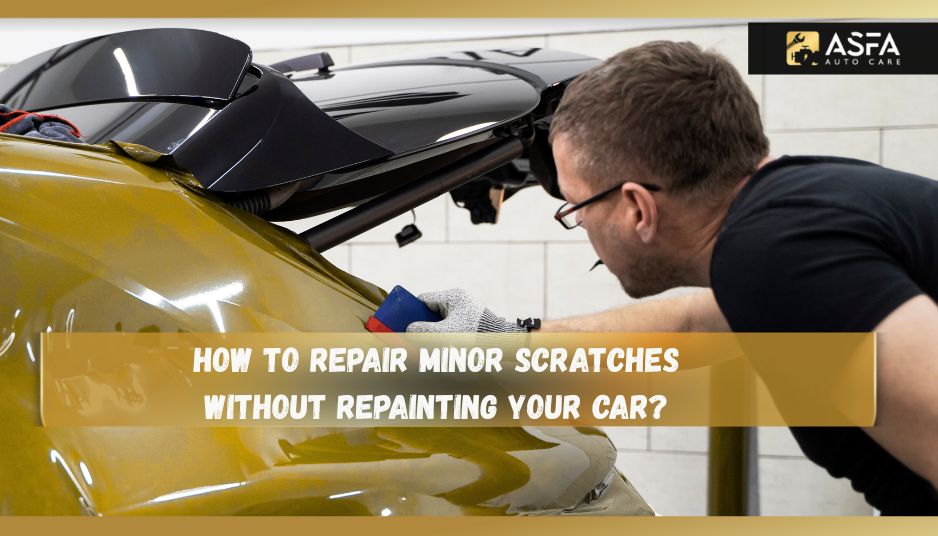
Scratches play a significant role in spoiling your car’s appearance and making it seem neglected. The good news is that not every mark needs a full repaint. Using basic tools and simple techniques, you can fix small scratches in your home. To do so, this guide walks you through how to identify, clean and repair these imperfections effectively with the tools you have for car scratch repair.
Types of Scratches
Scratches can differ based on intensity and the location of the hit. So, it is important to understand which types of car scratches you are dealing with before we begin to repair.
Surface Scratches
Surface scratches generally affect the outer coat layer of the paint. They usually happen from minor contact with sand, debris or cash wash brushes. If you touch them, the surface feels smooth with fewer deep grooves or edges. These are mostly minor car scratches that can be treated easily at home.
Paint Scratches
The scratches of paint strike the colour coating of your car. They are a little dull or picky and may be touched as a slight groove when one rubs the fingernail over them. For such cases, you can fix car scratches without repainting by following careful cleaning and polishing methods.
Deep Scratches
The deep scratches go to the primer or even the bare metal. You may be able to find a silver or grey streak under the car paint surface because of such contact. When these scratches are not treated, they may cause rust or additional damage to the paint.
Check the Scratch Depth
After understanding the scratch type, you have to test its depth. Here’s how you can take the necessary steps for polishing the car surface:
1. Start by washing and drying the scratch area.
2. Run your fingernail lightly near the scratch.
3. If the nail slides smoothly, it is a surface scratch.
4. If the nail catches slightly, the scratch has reached the paint layer.
5. If you can see bare metal, it is a deep scratch that needs careful attention.
This helps determine whether clear coat repair or deeper treatment is required.
Prepare the Area for Car Scratch Repair
Now you need to prepare the area for repairing scratches. Steps to prepare your car’s exterior to prevent car scratches are as follows:
Wash the area: Warm water should be used with a light car shampoo. Wet a microfiber towel using this solution and rub the cloth used on the exterior of your car to eliminate dirt, grease and any form of wax. By cleaning properly, ensure that car paint damage is avoided before the commencement of any polishing or repair.
Mask the surroundings: Apply painter’s tape around the scratch to protect other panels.
Inspect Closely: Look under natural sunlight to check how deep and wide the mark is.
Among noteworthy car maintenance tips is avoiding the use of harsh detergents or alcohol solutions before cleaning because they can dull the paint.
Steps to Follow for Surface Scratch Repair at Home
In order to fix surface scratches, you can follow the mentioned solutions. If you have a car scratch removal kit, it can make the process faster and more consistent.
Use Car Scratch Repair Products
Put a small portion of scratch remover products or a polishing compound on a clean microfiber cloth. In the next step, you’ll have to rub it gently across the dent in a clockwise motion for about 30 seconds. After that, wipe off any excess compound with a dry soft cloth.
Try Toothpaste for Light Marks
You can use toothpaste for faint marks, as it is an easy and affordable solution for car body repair. To do so, use a non-gel, white whitening toothpaste and apply it in a small amount to a damp soft cloth. In the next step, rub it gently in a clockwise motion over the scratch.
Once the scratch is gone, wet the same cloth with clean water and rub the toothpaste applied area of your car once again. This quick method is excellent for DIY car scratch removal at home.
Repairing Paint Scratches
You have to use a more stringent method if the scratch has affected your car’s paint. Here’s what you can do to perform DIY scratch repair for paint recovery.
Use Rubbing Compound
Rubbing polishing includes using a mildly abrasive compound to smooth out the car’s exterior and removing imperfections like scratches and swirl marks. To use this car wax solution, wipe the scratched part of the area using the same microfiber cloth in a circular motion.
Apply Polishing Compound
After rubbing the scratch with a rubbing compound, you would also be required to apply car polish compound to restore the shine of the paint. All you need to do is put a bit of polish on a clean microfiber cloth and rub it over the surface in small circles until the surface becomes light-reflective.
Steps to Follow for Deep Car Scratch Repairs
The deeper scratches take more attention, yet could be repaired at home, taking the correct approach. In this part, you can trace the steps that could be followed and learn how to remove scratches from car paint safely.
Clean the Area
Wipe the scratched part with automotive detailing tools to remove oils, wax or dust. Make sure it is fully dry before you apply any repair solution.
Apply a Car Scratch Repair Pen
In order to use a car scratch repair pen, clean and dry the scratched surface and shake it well. Next, evenly draw a line from the pen over the scratch and apply steady pressure to remove car scuff marks in an efficient way. Let the solution dry for about 30 minutes and apply a second coat if the scratch is still visible.
Blend with Clear Coat
After the colour layer is dry, apply with a fine brush a clear coat of a thin sheet over the repaired part. Allow to dry entirely and then start buffing, and do this step with a microfiber pad. The clear coating shields the colour underneath from sunlight and moisture on the exterior of the car. In order to have an ideal finish, one can get it further coated by a professional car paint repair service.
Final Thoughts
Minor scratches are easy and economical to repair when it is done at a slow pace. With the assistance of Mechanical Repair Services, you can also apply protection film to the areas that are likely to be scratched, such as door handles, mirrors, and bumpers. These movies minimise contact damage, and they are easily replaced.
FAQs
1. Can all types of scratches be repaired without a car body repair service?
You can repair light to medium scratches that impact the clear coat or paint layer with DIY solutions. However, you may need to contact your nearest car repair service centre if a scratch goes deep enough to cause harm to the car’s metal body.
2. How long does DIY solutions take to repair minor scratches?
Most of the minor paint or surface scratches can be fixed within a few hours with DIY car care items. The duration also depends on the scratch depth and method used.
3. Does using a scratch remover damage a car’s paint?
Using masking tape, automotive primer, or any other scratch remover does not cause any surface damage to your car’s exterior when used with care. In order to use scratch removers in a safer way, first apply them on a hidden spot, then gently apply them on the designated spot.
4. How often should I wax my car’s exterior?
Wax compounds can be applied to a car’s exterior every two or three months to get a smooth and protective layer. This duration is also considered sufficient for better car paint protection.
5. What’s the difference between a clear coat scratch and vs deep scratch?
A clear coat scratch is visible on the top protective layers and can be polished out easily. However, a deep scratch cuts through the colour or primer layer and hits the metal of your car’s exterior, which needs immediate attention for car body maintenance.
References