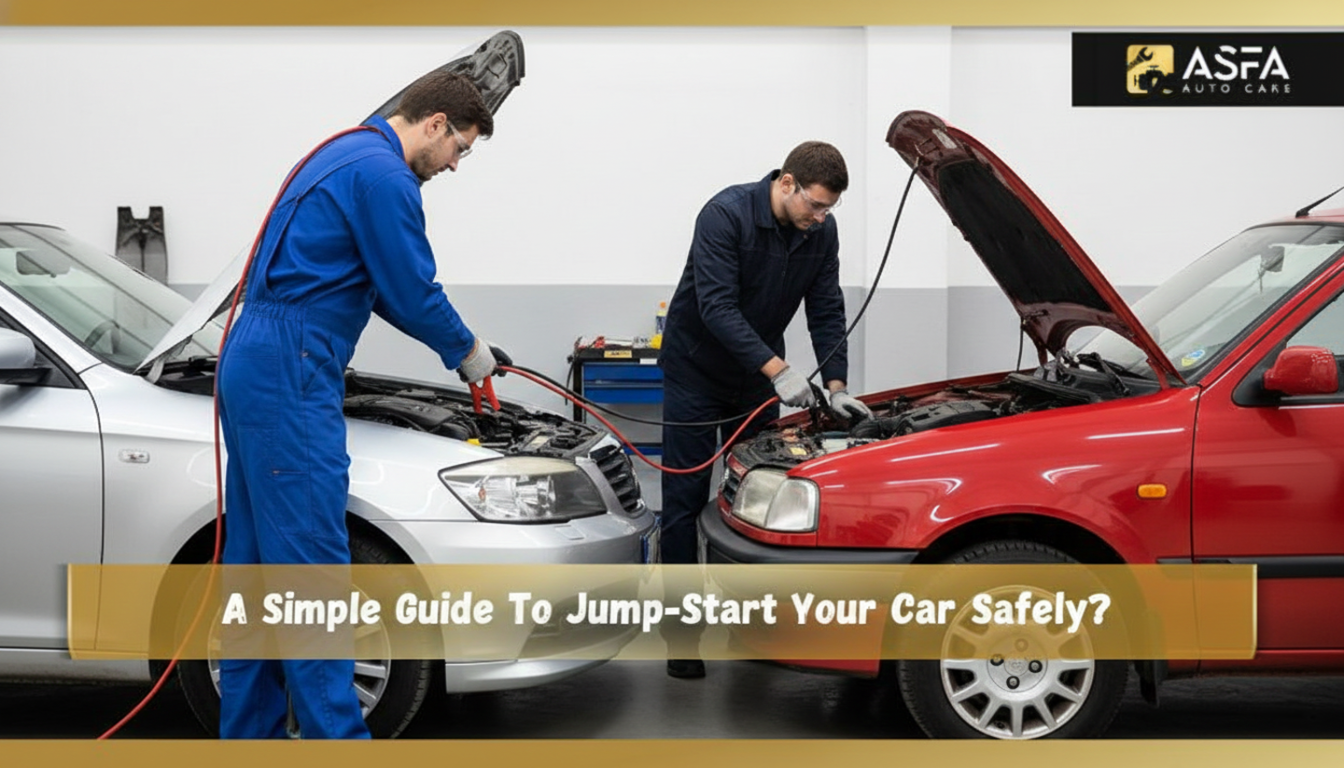
A dead battery is one of the most frequent reasons a car refuses to start. It can happen if your car is parked for too long or the battery has some malfunctions. In this regard, knowing how to jump-start a car can help you restore ignition and get back on the road quickly.
In this guide, we’ll discuss ways to jump-start a car, perform a battery boost and how a portable starter pack can be helpful for you. We will also discuss major precautions you should take prior to and following jump-starting your car.
Why Car Batteries Go Flat?
Your car’s battery can go flat if it does not have enough capacity to start the engine. This condition can happen for multiple reasons. These car won’t start jump battery symptoms include corrosion of battery terminals, old batteries reaching their end of lifespan or issues with the alternator.
The issues with the alternator can include not maintaining proper voltage. If such issues continue, seeking a trusted car battery service can help diagnose the root cause.
What To Do When The Car Battery Is Drained?
The first step to take is to switch off the ignition, take out the key from the ignition lock cylinder and open the bonnet of the car carefully for a safe car jump start. Find battery terminals with corrosion or loose connections.
In some cases, this problem can be resolved by tightening sockets and wires and wiping them down with a dry cloth. But if you notice swelling and leaking or a strong smell of sulphur, do not attempt to jump-start the car. These are signs that the car battery died what to do next may involve replacing it entirely.
If you are thinking to doing a push start on your car, a few things have to be considered. The main difference between the jump-start vs push-start car is the force technique.
The push start is done by pushing the vehicle so that the engine’s movement produces enough compression to start combustion. While a jump start is done through transferring electrical energy from the charged battery to the flat one through jumper cables or a portable device.
Equipment You’ll Need Before Starting
In order to begin with the jump car battery safely, you will need some essential components handy. These include:
- Jumper Cables: These cables will support you to have a good and safe connection when jump-starting vehicles whose batteries are drained. They are typically 77.3 inches (196 cm) long with a rating of 800 Amp, which is useful in jump-starting a dead battery.
- Supporting Vehicle: These automobiles can be your neighbourhood, SUV, hatchback or sedan with sufficient power to turn on both cars’ engines.
- Safety Gear: Wearing gloves and eyewear to avoid the risks of jump-starting a car, such as electrical shock or dust.
- Vehicle Positions: Make sure both vehicles are facing each other, the transmission is set to neutral, the engine is turned off and the handbrakes are applied before connecting the jumper cables.
- Portable Jump Starter Pack: You may also use a jump starter pack to start your car, which often comes with the capability to turn on both petrol and diesel engine vehicles.
Step-by-Step Process for Jump-starting a Car
The following Jump Starting a Car Step by Step process goes through preparation, connecting appropriate cables and a safe restart for your car:
Step 1: Preparation
Many car owners have a similar question: how can I get a jump start? In this context, first park both vehicles close enough to easily attach the jumper cable. At the same time, make sure the transmission is set to neutral gear and the handbrakes are applied to both vehicles.
Next, switch off the ignition and all electric accessories on both vehicles. Ensure physical checking car battery health before jump start, open the bonnets and locate the car’s batteries.
Step 2: Connecting the Jumper Cables
The next step is the use of jumper cables. Connecting jumper cables correct order involves locating the positive and negative terminals on both batteries. Positive is usually denoted as the + sign or red colour, and negative is shown as the – sign or black colour.
The red cable end of one of them is to be connected to the positive terminal of the discharged battery, and the other to the positive terminal of the good battery. Then the negative end of the black cable must be connected to the negative terminal of the good battery.
You need to connect the remaining black clamp to a clean and unpainted metal part of the engine block or chassis of the car. This method is used to prevent any spark or malfunction during the jump-start car battery Australia.
Step 3: Starting the Vehicles
Among automobiles, jump-starting a dead battery starts with turning on the donor vehicle first and keeping the engine on for a few minutes.
This process allows some charge to flow into the flat battery. After that, try to start the car with the drained battery. Once your car’s engine starts, let both vehicles idle for a few more minutes to stabilise the charge on the battery.
Step 4: Disconnecting the Cables
Turn off the ignition of the donor car before you remove the jumper cables. Disconnect the cables in reverse order, first remove the black clamp from the engine block of the flat battery car. Next, disconnect the black clamp from the healthy battery.
Now, remove the positive cable from the donor car’s battery and then remove the same cable from the flat battery car. This step completes the jump-start procedure car.
Vehicle Battery Jump Start Tips
To get your vehicle battery and electric system out of further problems, here are the steps that you should take after your car has started:
- Let the Engine Idle: You should leave the engine running for a few minutes so as to recharge the battery.
- Keep Cables Clean: It is necessary to store the jumper cables in a dry and untangled form so they are not corroded or wet.
- Inspect the Battery Condition: If the battery drains several times, have it checked by a car mechanic to get the root cause of the malfunction.
Using a Portable Jump Starter Pack for Cars
Instead of relying on another vehicle, you can use a portable jump starter pack car to revive your battery. It accumulates electrical energy and uses it directly to charge your car battery.
To operate this device, make sure that the pack is charged. Then, follow the instructions manual of the portable jump starter pack, as the procedure can vary by the device.
How to Prevent Future Flat Batteries?
Here are some easy habits that you may adopt in order to prevent car battery issues. These car battery safety precautions will make you less likely to find yourself with a drained battery:
- Drive Regularly: Driving after jump-starting to recharge battery ensures that the alternator is able to use energy at an optimum level.
- Switch Off Electrical Components: Turn off the headlights, interior lights and other electrical appliances once your car is parked, as it helps to maximise its battery life.
- Periodically Clean Your Car: You should clean and make frequent inspections of the car battery terminals and cables.
If you’re unsure what to check after jump-start, start with battery voltage and terminal condition with the help of an automobile mechanic.
Final Thoughts
Knowing how to jump a car battery is one of those things every driver should know. With the right gear and a little care, you can get your car running again without much hassle. If you’ve got a portable jump starter, it gets even easier.
This equipment allows you to bring your battery back to life on your own. Turn off the car’s engine, place the cables accordingly and you will be able to charge your vehicle’s battery. If the issue persists, a qualified car mechanic can help identify deeper electrical or battery-related problems.
FAQs
1. What is the safest way to jump-start a car?
You must begin by attaching the positive terminals on the two batteries to the positive clamps to jump-start your car engine. In the case of the negative (-) clamp, one end of the good battery is linked to the negative end. But do not attach the other negative clamp to the negative side of the drained battery.
Instead, place it to an engine block or frame. By doing so, you reduce the danger of sparking around the battery, which can trigger any hydrogen gas suspended around the battery.
2. How can I jump-start a car by myself?
To jump-start your car on your own, grab a set of jumper cables, a second car, or a fully charged battery pack. Follow the steps carefully so you can get your car running again.
3. How long should I leave the cables connected after starting the car?
Allow the cables to remain connected between one and two minutes after the car starts up. This will assist the battery to charge effectively to operate effectively.
4. What if my car won’t start even after a jump-start?
If your car won’t start after a jump-start, the battery might be damaged or there may be a more complex electrical issue.
In such situations, reach out to the auto repair technician to inspect your vehicle’s electrical system.
5. What equipment do I need to jump-start a car?
You will require either a set of strong jumper cables or a jump-start pack. Moreover, carry safety gloves, eye protection glasses, small wire brushes or clothes to wash off corroded battery terminals.
6. Can modern cars be jump-started safely?
Modern cars can be jump-started with the correct voltage supply and by following the connection sequences. However, newer vehicles have complex electronic control units. So, you may need to contact a mechanic to turn on these vehicles.